

Yobole's Stage LED Display Sets the 70th Eurovision Song Contest Ablaze
In June 2026, the 70th Eurovision Song Contest (ESC) was held in grand style in Vienna, Austria. As one of the world’s most influential live events, this year’s contest attracted hundreds of millions of viewers from around the globe to watch online. With its leading stage LED display products and solutions, Yobole provided a solid technological foundation for this premier audiovisual spectacle, becoming an indispensable core element of the event’s stage visuals.
From the 95,000 spectators at nine sold-out live performances to hundreds of millions of television viewers worldwide, Yobole utilized industry-leading LED display technology and solutions to create a highly immersive visual space with exceptional image quality for the event. This not only showcased the creative expressions of the national delegations but also set a new benchmark for visual technology in large-scale live broadcasts.
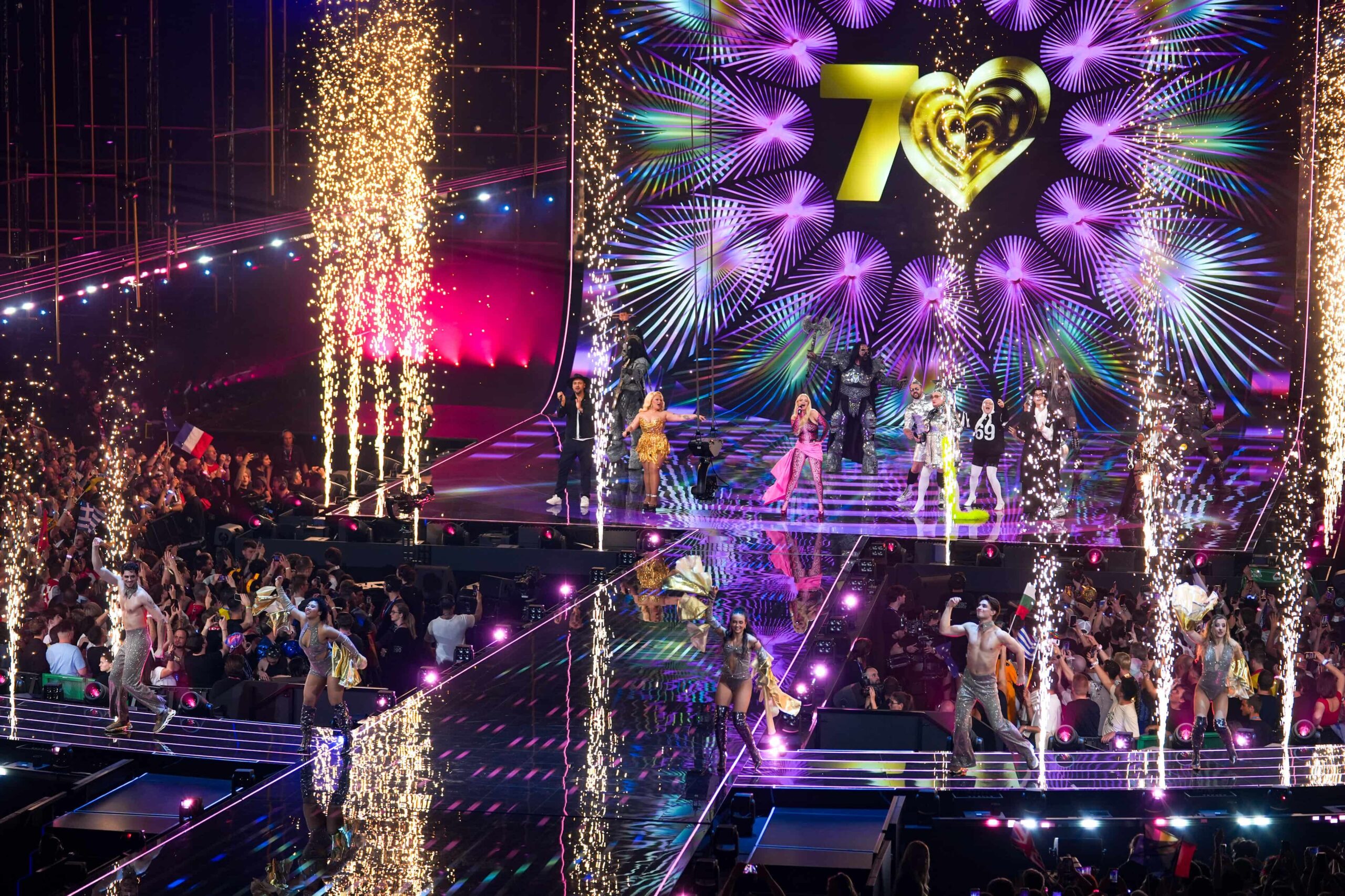
49 Million Pixels: Creating a World-Class Visual Canvas
This year’s Eurovision Song Contest brought together delegations from dozens of countries, each with independent creative control and distinct, high standards for stage visuals. To meet these demands, the event’s technical team deployed approximately 500 square meters of Yobole stage LED displays, with a total of over 49 million pixels, creating a flexible digital ecosystem that combines high reliability, adaptability, and outstanding on-camera performance.
In terms of specific product selection, Yobole’s two major product series seamlessly integrated to form a unified yet layered visual space:
The P2.6 series stage LED screens, with their high contrast, lightweight design, and outstanding color reproduction, serve as vertical background displays. They can seamlessly switch between deep, atmospheric effects and high-energy visuals, and can be configured into customized, seamless curved “infinite screens”;
The P3.91 series of transparent stage LED screens are installed on the stage floor. Featuring exceptional structural durability, they can withstand high-intensity choreography, the movement of heavy props, and rapid scene changes, while meeting broadcast-grade standards for black level, color accuracy, and wide viewing angles.
By seamlessly integrating horizontal tile screens with vertical background screens, the physical boundaries of a traditional stage are effectively broken down. Video content flows naturally across different display surfaces, creating a strong sense of spatial depth and an immersive atmosphere, and providing performers with a broader scope for creative expression.
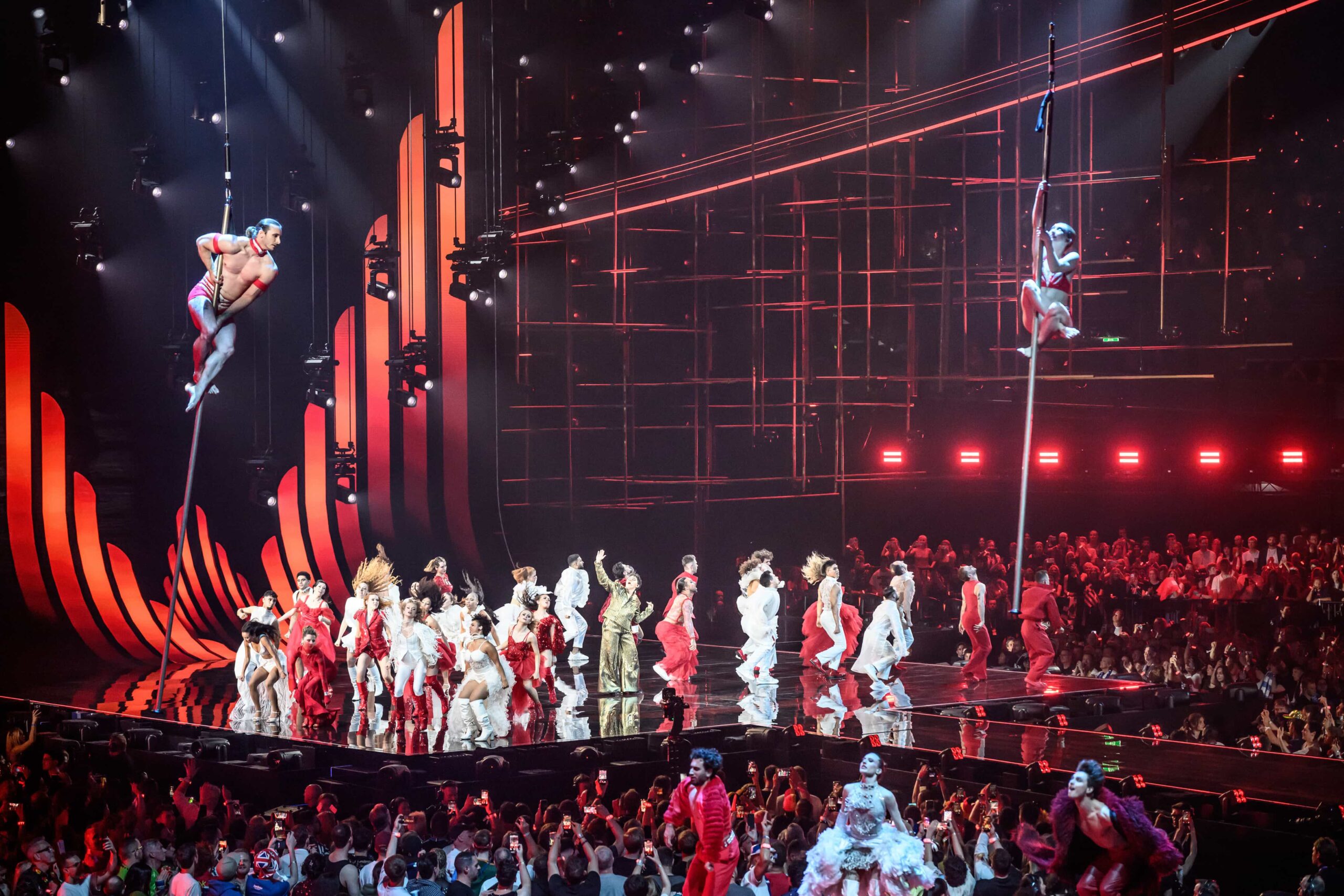
Frame-Level Synchronization and Native ST 2110 Workflow: Leading the Way in Broadcast Technology Upgrades
To ensure precise synchronization of visuals across multiple screens, the technical team integrated the system with 16 Megapixel Helios 8K LED controllers and equipped it with eight disguise servers to simultaneously process 32 redundant 4K output channels. The seamless collaboration between the Helios processors and Yobole displays ensured that every frame—from technical rehearsals through the live broadcast of the finals—remained stable, precise, and latency-free.
In terms of signal transmission, this year’s event fully adopted a native ST 2110 workflow, completely abandoning the traditional baseband signal distribution architecture. This enabled end-to-end IP-based signal transmission from media servers to screens, establishing a new technical paradigm for modern large-scale event broadcasts. The event organizers stated: “Our approach this time was completely different. All signal distribution is native ST 2110; there is no SDI or HDMI used throughout the entire process, nor is any signal conversion required. For a live broadcast of this scale, this solution is extremely rare.”
The signal system, developed over three years, operates on a fully redundant 100GB network utilizing Arista and Netgear AV switches, capable of routing approximately 4.2 TB of data per second. The seamless compatibility of Yobole display products within this high-throughput IP ecosystem further validates their technical suitability for future live television and IP broadcasting workflows.
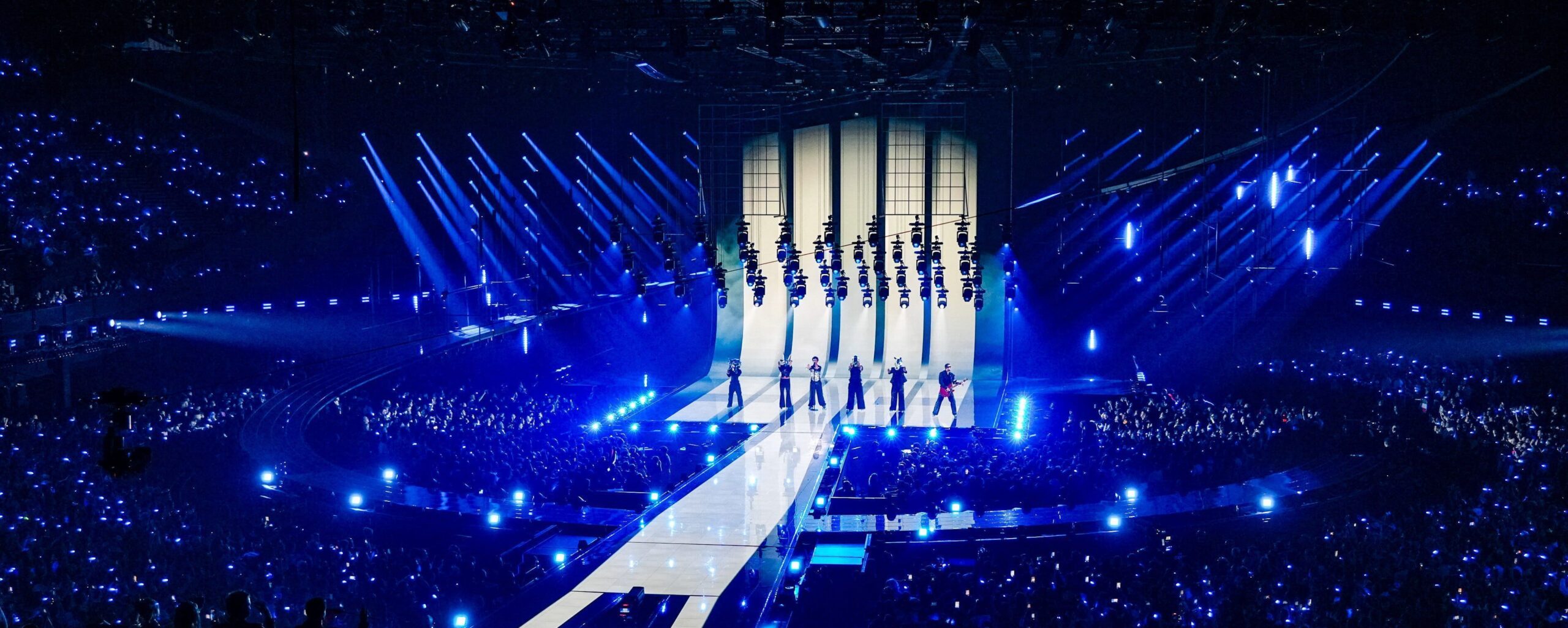
42-Second Extreme Set Changes: Technical Stability Put to the Test
The Eurovision Song Contest has always been known for its high intensity and fast pace. In this year’s competition, on-site staff were required to completely transform the stage appearance between each contestant’s performance within a strict 42-second timeframe. Yobole’s signature quick-lock system and stable electronic architecture provided the technical team with robust operational support, ensuring that every scene change was fast, smooth, and error-free.
Even when faced with customized requests from various delegations—such as the Maltese delegation’s 36-square-meter holographic LED screen and the Latvian delegation’s projection mapping using Panasonic RQ35 laser projectors—the core video infrastructure remained highly stable, causing no disruption to the live broadcast’s pace.
Furthermore, this year’s contest marked the first time rolling-shutter cameras were extensively used in such a large-scale production, presenting a new challenge for the synchronization of LED screens. Thanks to their high refresh rates, high-quality components, and advanced grayscale processing technology, Yobole’s stage LED displays effectively eliminated image artifacts and moiré patterns, ensuring that millions of viewers worldwide received clear, pristine, and interference-free live broadcasts. Ultimately, Bulgaria’s contestant DARA made history by winning the championship with her entry “Bangaranga!”, bringing the competition to a successful close.
Continuous Innovation, Empowering Future Audio-Visual Experiences
The successful hosting of the 70th Eurovision Song Contest once again demonstrated Yobole’s technical prowess and collaborative capabilities in large-scale international events. The organizers commented: “The Eurovision Song Contest is one of the most demanding live broadcast productions in the world. Expectations rise every year, and the real challenge lies in ensuring a large-scale production while bringing the unique creative vision of each performance to life.”
For Yobole, providing the ideal visual stage for the world’s most creative production teams has always been its unwavering mission and pursuit. This landmark event once again highlights Yobole’s continuous investment in research and development, as well as its firm commitment to creating the most reliable, innovative, and stage-ready LED display technology available today.
Moving forward, Yobole will continue to deepen its expertise in the fields of stage performance and large-scale event visual technology. With higher-performance LED display products, more comprehensive system solutions, and more professional end-to-end service capabilities, Yobole will empower the world’s top production teams to achieve even more imaginative visual expressions. We will accelerate the integration of cutting-edge technologies—such as stage LED screens, Mini/Micro LED, and AI image quality optimization—into our products and solutions, while actively expanding their practical applications across diverse scenarios, including large-scale event broadcasts, immersive performances, and virtual production. Yobole looks forward to collaborating with global partners to drive the visual evolution of live entertainment and broadcast content through continuous technological innovation, delivering more breathtaking, moving, and unforgettable moments of light and shadow to audiences worldwide.
相关新闻
-
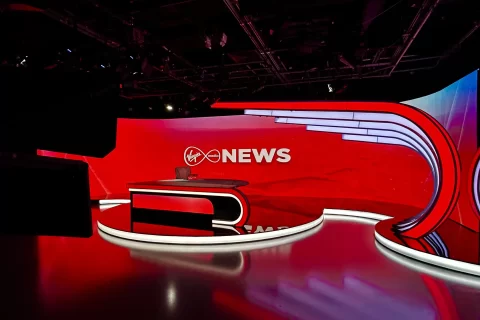
Yobole's Fine-Pitch LED Screens Help Upgrade Virgin Media's TV Studio
Yobole recently helped Virgin Media Ireland complete an upgrade of its core news studio display system, using LED screens from the MINI series to create a seamless curved LED display over 17 meters wide.
-
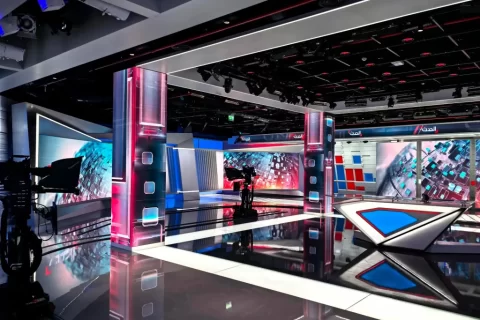
Yobole LED Displays Help Al-Hadas TV Set a New Standard for Broadcast Studios
Yobole recently installed a fine-pitch HD LED display covering more than 400 square meters in the studio of Al Hadath TV, part of the MBC Group, the Middle East Broadcasting Center.
-
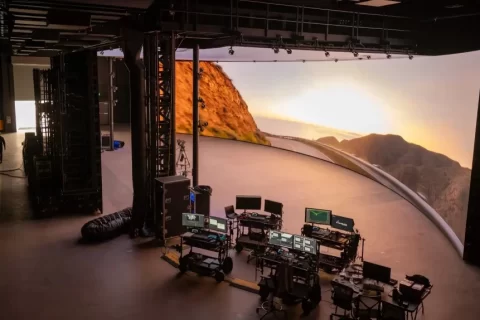
Yobole LED Screens Help NantStudios Create the World's First Dynamic XR Virtual Studio
Yobole helped NantStudios successfully establish the world’s first DVS dynamic XR virtual studio in California using more than 2,000 square meters of P1.5 series LED displays.
-
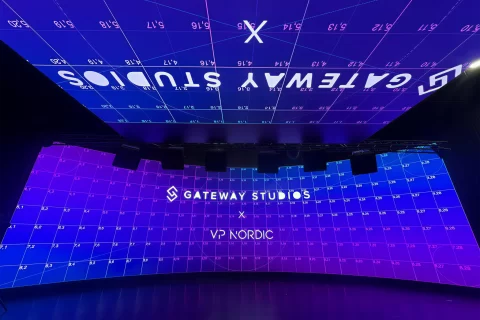
Yobole Has Successfully Completed Multiple XR Virtual Studio Projects
Yobole has recently accelerated its expansion in the global XR virtual production market, launching flagship projects in the United States, Poland, the Netherlands, Sweden, Norway, the United Kingdom, and other countries, covering two major areas: commercial film and television production and practical training in higher education.
-
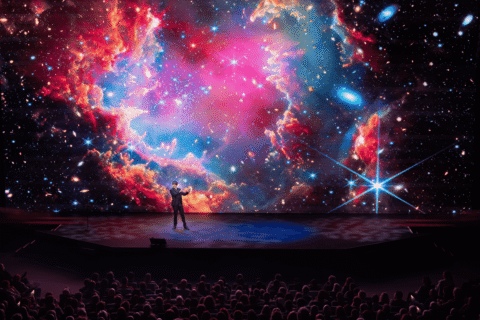
Yobole Stage LED Screens Shine on Brian Cox’s “Emerging” World Tour
In July 2026, Yobole provided a full suite of stage LED display products and solutions for the Australia and New Zealand leg of Professor Brian Cox’s “Emergence” world tour.
-
Yobole LED Displays Light Up the NBA China Games
In January 2026, Yobole’s P2.6 series stage LED displays and solutions—covering over 500 square meters—lit up the NBA Macau tournament venue. This series offers outstanding visual performance, flexibility in modular design, and structural stability for long-term use.