

What is the optimal viewing distance for different LED screens?
The viewing distance for LED displays can be accurately estimated based on the pixel pitch. The industry-standard formula is as follows: The minimum viewing distance is 1 times the pixel pitch; at distances shorter than this, the LED chips become visible to the naked eye, resulting in a coarse image. The optimal viewing distance range is between 1 and 3 times the pixel pitch; within this range, the image is detailed and comfortable to view. The maximum effective viewing distance is 30 times the overall height of the screen; beyond this distance, small text becomes blurry, and only the general outline of the image can be discerned.
This formula, compiled by Yobole, serves as a general guideline. The actual optimal viewing distance is influenced by factors such as screen brightness, grayscale levels, viewing angle, screen uniformity, ambient brightness, and viewing direction, and may be adjusted slightly based on the on-site environment and visual experience.
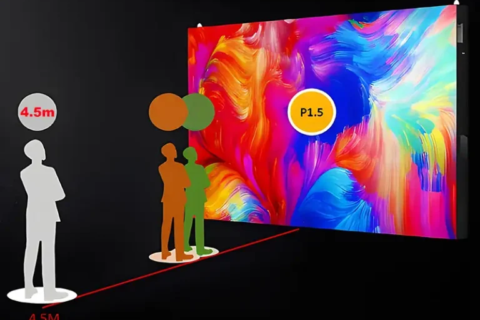
Standard Viewing Distance Reference Table for LED Screens
Based on the above formula, the standard viewing distances for LED displays with various standard pixel pitches are as follows:
P1.5 LED Display Optimal Viewing Distance: 1.5–4.5 meters
P2.0 LED Display Optimal Viewing Distance: 2.0–6.0 meters
P2.5 LED Display Optimal Viewing Distance: 2.5–7.5 meters
P3.0 LED Display Optimal Viewing Distance: 3.0–9.0 meters
P4.0 LED Display Optimal Viewing Distance: 4.0–12.0 meters
P4.75 LED Display Optimal Viewing Distance: 4.8–14.3 meters
P5 LED Display Optimal Viewing Distance: 5.0–15.0 meters
P6 LED Display Optimal Viewing Distance: 6.0–18.0 meters
P8 LED Display Optimal Viewing Distance: 8.0–24.0 meters
P10 LED Display Optimal Viewing Distance: 10.0–30.0 meters
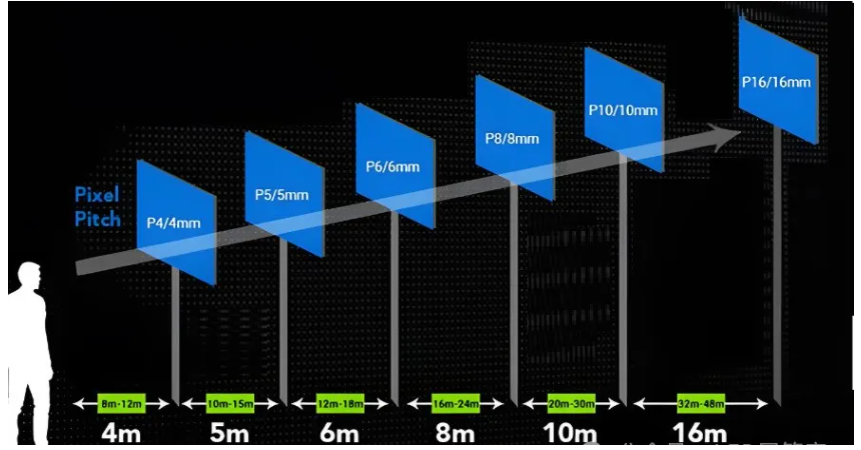
Supplementary Notes on Scene Selection
For scenes where text is the primary focus, it is recommended to select a value close to the minimum viewing distance to ensure the clarity of small text. For scenes where dynamic video and visual content are the primary focus, it is advisable to select a value close to the upper limit of the optimal viewing distance to balance display quality and cost-effectiveness. Additionally, the viewing distance from the front row must exceed the screen’s minimum viewing distance to prevent a grainy appearance that could impair the viewing experience.
相关新闻
-
What is the GOB Process?
The GOB process supports a wide range of LED displays, including fine-pitch LED displays, ultra-rugged rental LED displays, ultra-rugged floor-standing interactive LED displays, and ultra-rugged transparent LED displays.
-
How Can You Tell if an LED Display Is Good or Bad?
The quality of an LED display hinges on its long-term operational reliability, which is primarily determined by five core components: the LED chips must be highly stable, and the cabinet must be sturdy and provide effective heat dissipation, among other factors. These factors also serve as important considerations for users when making a purchase.
-
A Beginner's Guide to LED Displays: From Principles to Applications
As semiconductor manufacturing processes continue to mature, the pixel pitch of LED displays is becoming smaller and their resolution higher, leading to an ever-expanding range of applications for LED displays.
-
What is a monochrome LED display?
A monochrome LED display is a display device consisting of a dot matrix formed by single-color LED chips. By using a control system to regulate the on/off status and brightness of each LED chip, it displays content such as text and graphics.
-
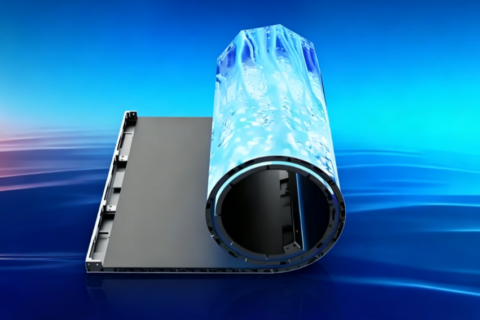
Why Are LED Roll-Up Screens So Popular?
The key to the roll-up storage capability of LED roll-up screens lies in the flexibility of their materials. They use thin-film substrates or flexible materials such as polymers to replace traditional rigid PCBs, with the LED chips and driver circuits mounted on a bendable substrate.