

What is the GOB Process?
GOB stands for “Glue on the Board.” The GOB process utilizes a new type of optically thermally conductive nano-filled material. Through a specialized process, it applies this material to conventional LED display PCBs, along with their surface-mounted LEDs and dual-matte optical treatment, to achieve a frosted effect on the LED display surface. This technology improves existing protection methods for LED displays and innovatively transforms point light sources into surface light sources for display purposes. It holds vast market potential in various fields.
The GOB Process Addresses Industry Pain Points
Currently, traditional screens leave the light-emitting elements completely exposed, resulting in serious defects.
1. Low protection rating: They offer no protection against moisture, water, dust, shock, or impact. In humid climates, they are prone to widespread dead pixels and light failures. During transportation, LEDs are prone to falling out or breaking. They are also susceptible to static electricity, which can cause dead pixels.
2. Significant Eye Damage: Prolonged viewing causes glare and eye strain, and the eyes receive no protection. Additionally, there is the “blue light hazard.” Due to the short wavelength and high frequency of blue LEDs, prolonged direct exposure of the human eye to blue light can easily lead to retinal damage.
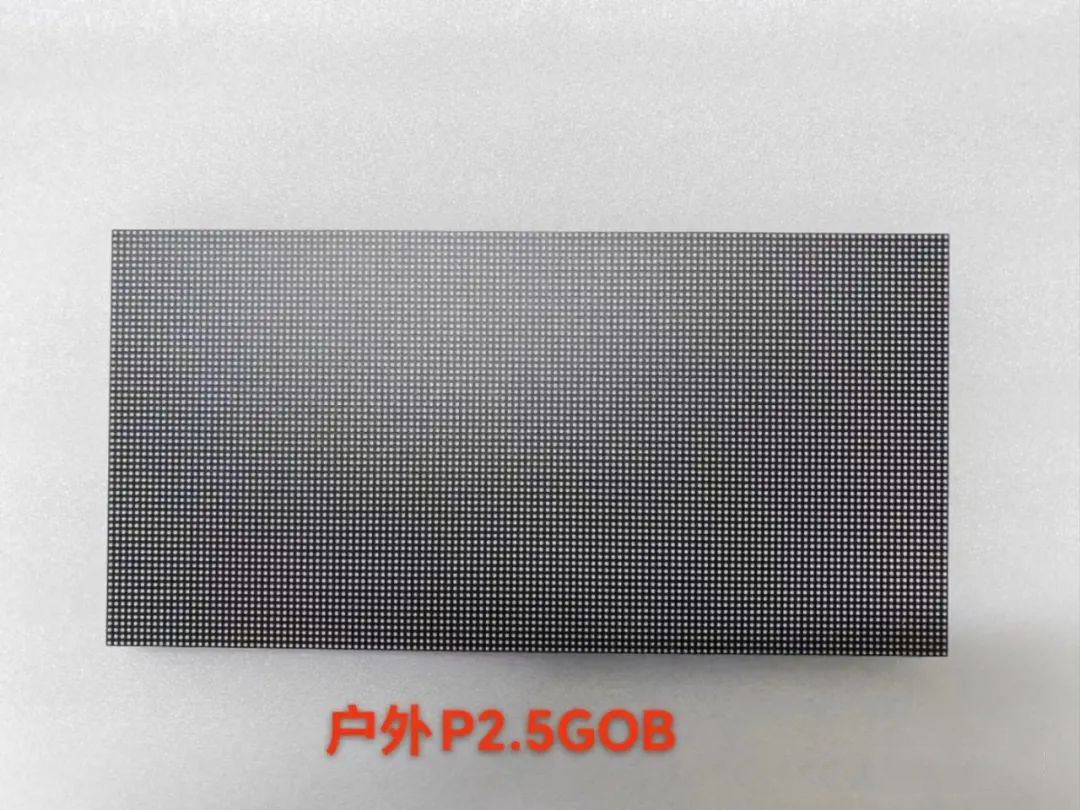
Advantages of the GOB Process
1. Eight Protections: Waterproof, moisture-proof, impact-resistant, dust-proof, corrosion-resistant, blue light-proof, salt-proof, and anti-static.
2. The frosted surface effect also enhances color contrast, enabling a transition from point light sources to area light sources and widening the viewing angle.
Detailed Explanation of the GOB Process
The GOB process truly meets the requirements for LED display product characteristics and ensures standardized mass production with consistent quality and performance.
This requires a complete production workflow, reliable automated production equipment developed in conjunction with the manufacturing process, custom-made Type A molds, and packaging materials developed to meet product specifications.
Material Breakage
GOB packaging materials must be custom-developed in accordance with the GOB process specifications and must meet the following characteristics: 1. Strong adhesion; 2. High tensile strength and resistance to vertical impact; 3. Hardness; 4. High transparency; 5. Temperature resistance; 6. Resistance to yellowing; 7. Salt spray resistance; 8. High abrasion resistance; 9. Anti-static properties; 10. High-voltage resistance; etc.
Filling
The GOB encapsulation process must ensure that the encapsulation material completely fills the spaces between the LED chips, covers their surfaces, and adheres firmly to the PCB. There should be no air bubbles, pinholes, white spots, voids, or underfill on the bonding surface between the PCB and the adhesive.
Thickness Deviation
Consistency of the adhesive layer thickness (specifically, the consistency of the adhesive layer thickness on the LED surface). After GOB encapsulation, the uniformity of the adhesive layer thickness on the LED surface must be ensured. Currently, the GOB process has been fully upgraded to version 4.0, with virtually no tolerance for adhesive layer thickness; the thickness tolerance of the finished module is the same as that of the original module. In fact, the thickness tolerance of the finished module can even be reduced compared to the original module. The joint flatness is perfect!
Leveling
The surface flatness after GOB encapsulation should be excellent, with no unevenness, ripples, or other imperfections.
Surface Finish
Surface treatment of the GOB container. Currently, surface treatments in the industry are categorized into matte, semi-matte, and mirror finishes based on product characteristics.
Maintenance Access
The reparability of GOB after encapsulation should ensure that the encapsulation material can be easily removed under certain conditions, allowing the removed area to be filled and repaired after routine maintenance.
GOB Process
The GOB process supports a wide range of LED displays:
Suitable for small-pitch LED displays, ultra-protective rental LED displays, ultra-protective floor-standing interactive LED displays, ultra-protective transparent LED displays, LED smart panel displays, LED smart billboard displays, and LED creative displays, among others.
Summary
Yobole is deeply engaged in the LED display field, focusing on innovative technology applications and customized scenario-based solutions. Its business covers a full range of LED display products, including GOB small-pitch LED displays. Featuring GOB (Glue on Board) surface encapsulation technology, this product forms a high-strength transparent protective layer over the LED lamps, effectively enhancing resistance to impact, moisture, dust, and static electricity while maintaining excellent display performance and heat dissipation. It is particularly suited for close-viewing scenarios that demand high reliability and image quality, such as conference rooms, control rooms, and educational displays. With stable product quality and flexible customization capabilities, Yobole continues to provide global customers with LED display solutions that combine durability and visual excellence.
相关新闻
-
A Beginner's Guide to LED Displays: From Principles to Applications
As semiconductor manufacturing processes continue to mature, the pixel pitch of LED displays is becoming smaller and their resolution higher, leading to an ever-expanding range of applications for LED displays.
-
How Can You Tell if an LED Display Is Good or Bad?
The quality of an LED display hinges on its long-term operational reliability, which is primarily determined by five core components: the LED chips must be highly stable, and the cabinet must be sturdy and provide effective heat dissipation, among other factors. These factors also serve as important considerations for users when making a purchase.
-
What is a monochrome LED display?
A monochrome LED display is a display device consisting of a dot matrix formed by single-color LED chips. By using a control system to regulate the on/off status and brightness of each LED chip, it displays content such as text and graphics.
-
What is the optimal viewing distance for different LED screens?
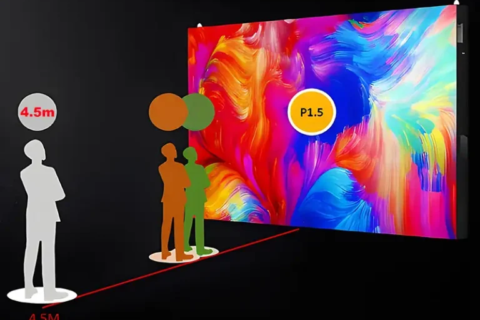
The viewing distance for an LED display can be accurately estimated based on the pixel pitch; the minimum viewing distance is 1 times the pixel pitch, and the optimal viewing distance range is between 1 and 3 times the pixel pitch.
-
Why Are LED Roll-Up Screens So Popular?
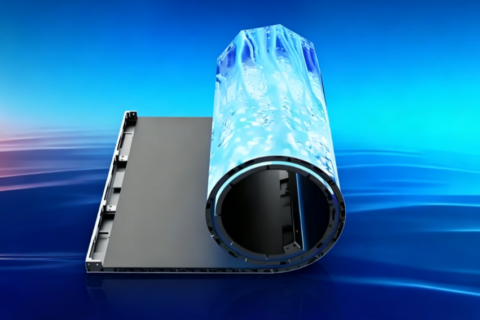
The key to the roll-up storage capability of LED roll-up screens lies in the flexibility of their materials. They use thin-film substrates or flexible materials such as polymers to replace traditional rigid PCBs, with the LED chips and driver circuits mounted on a bendable substrate.