

How Can You Tell if an LED Display Is Good or Bad?
Faced with the wide variety of LED displays on the market, many people don’t know how to determine their quality. In fact, the key to judging whether a display is excellent lies in its reliability—that is, whether it can operate stably, clearly, and safely over the long term.
In theory, industry standards for LED displays require a Mean Time Between Failures (MTBF) of no less than 10,000 hours. However, given the current state of domestic technology, it is not easy to truly meet this requirement—let alone produce high-reliability products of an even higher grade. To build a truly durable display, one must not only strive for perfection in materials but also balance advanced technology with practicality in the design.
Below, Yobole breaks it down into five key areas to guide you step by step on how to determine whether an LED display is trustworthy.
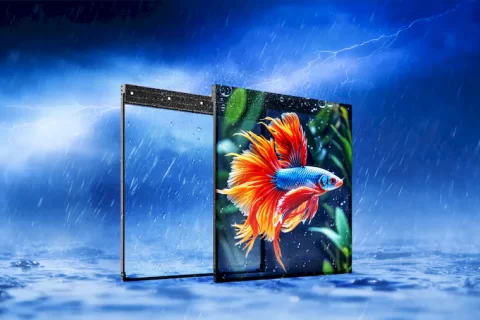
1.examine the light-emitting diodes (LED chips)—the screen’s “pixels”
Light-emitting diodes are the most basic building blocks of a display, and their quality directly affects the image’s brightness, color, and lifespan. High-quality LED chips should possess the following characteristics:
- Stable performance: Minimal differences in brightness and color among LEDs from the same batch, ensuring high consistency;
- High brightness and slow decay: Minimal brightness loss over extended use, maintaining vivid display quality;
- Strong resistance to interference: Tolerant of voltage fluctuations and resistant to damage;
- Pure colors and consistent viewing angles: Minimal color shift when viewed from different angles, ensuring a uniform image;
- Good light distribution: Light is distributed evenly, with no bright spots or dark areas;
- Strong environmental adaptability: Withstands outdoor temperature fluctuations, humidity, and UV exposure, and is resistant to aging.
2.examine the cabinet structure—the screen’s “skeleton”
The cabinet is the structural framework that houses all LED chips and control components; its sturdiness and protective capabilities are crucial.
- High-quality enclosures are typically made of steel plate or aluminum, ensuring sturdiness, durability, and excellent heat dissipation;
- They feature a hinged-door design for easy maintenance and servicing;
- They must balance heat dissipation with waterproofing and moisture resistance, especially for outdoor screens, which must withstand wind, rain, and high temperatures.
3.examine the connectors—the screen’s “nerve connections”
Although connectors may seem unremarkable, they are critical nodes for signal and current transmission. Poor contact can lead to screen flickering, color distortion, or even a black screen.
- High-quality connectors should be used, with interface areas featuring a pure gold plating of sufficient thickness;
- Ensure they maintain good electrical conductivity even in high-temperature and high-humidity environments;
- High-quality connectors effectively reduce contact resistance, ensuring long-term stable system operation and minimizing the risk of failure.
4.examine the switching power supply—the screen’s “heart”
The power supply is the energy source for the entire system; if it malfunctions, the screen will “shut down.”
- Select certified, well-known brand switching regulated power supplies;
- All power supply modules must undergo rigorous stress testing and aging screening before leaving the factory;
- A high-quality power supply can withstand voltage fluctuations and maintain stable output during prolonged continuous operation, serving as the fundamental guarantee for the screen’s reliable operation.
5.examine the circuit board and driver ICs—the screen’s “brain and neural network”
The circuit board houses all electronic components, while the driver ICs directly control the brightness and on/off status of each LED.
- The circuit board should be made of flame-retardant epoxy laminate to ensure fire safety;
- The layout should be well-designed with standardized wiring to meet electromagnetic compatibility (EMC) requirements and prevent signal interference;
- The driver IC must maintain high-precision constant-current output across a wide temperature range to ensure a uniform display without color distortion;
- The primary materials of the entire system should ideally hold international or domestic certifications such as CE, FCC, UL, and CCC, verifying that their safety and quality are guaranteed.
Conclusion
In summary, a truly highly reliable LED display is by no means simply a matter of assembling LED chips; rather, it requires comprehensive quality control across five key components: the LEDs, the cabinet, the connectors, the power supply, the circuit board, and the driver IC. Only by getting every detail right can the screen remain consistently stable even when exposed to sun and rain and during prolonged operation, thereby truly earning the trust of users.
With continuous technological advancements, the reliability and image quality of LED displays are constantly improving. Looking ahead, Yobole has every reason to believe that this industry will become increasingly mature, products will grow ever more sophisticated, and application scenarios will expand further. We hope that the information provided above will help you develop a clear understanding and direction when selecting or evaluating LED displays.
相关新闻
-
What is a monochrome LED display?
A monochrome LED display is a display device consisting of a dot matrix formed by single-color LED chips. By using a control system to regulate the on/off status and brightness of each LED chip, it displays content such as text and graphics.
-
What is the optimal viewing distance for different LED screens?
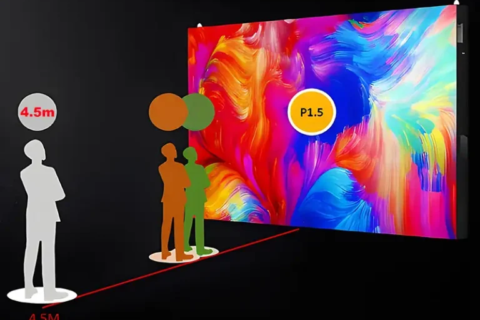
The viewing distance for an LED display can be accurately estimated based on the pixel pitch; the minimum viewing distance is 1 times the pixel pitch, and the optimal viewing distance range is between 1 and 3 times the pixel pitch.
-
Why Are LED Roll-Up Screens So Popular?
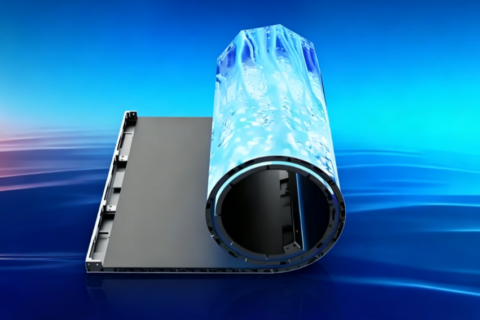
The key to the roll-up storage capability of LED roll-up screens lies in the flexibility of their materials. They use thin-film substrates or flexible materials such as polymers to replace traditional rigid PCBs, with the LED chips and driver circuits mounted on a bendable substrate.
-
A Beginner's Guide to LED Displays: From Principles to Applications
As semiconductor manufacturing processes continue to mature, the pixel pitch of LED displays is becoming smaller and their resolution higher, leading to an ever-expanding range of applications for LED displays.
-
What is the GOB Process?
The GOB process supports a wide range of LED displays, including fine-pitch LED displays, ultra-rugged rental LED displays, ultra-rugged floor-standing interactive LED displays, and ultra-rugged transparent LED displays.