

2026 Fine-Pitch LED Displays: COB and Mini LED Technologies Drive Industry Innovation
The continuous evolution of the digital economy and smart applications has significantly raised the quality standards for visual displays across various industries. Fine-pitch LED screens, as the core hardware for smart visualization, have been widely adopted in government, security, cultural tourism, and corporate office settings. By 2026, as technologies such as COB packaging, Mini LED, AI algorithms, and lightweight modules reach full maturity and widespread adoption, the fine-pitch LED industry will completely move beyond its previous era of extensive, unregulated growth. It will undergo a comprehensive upgrade—from underlying technologies, image quality, and smart interaction to installation processes and industry standards—and officially enter a new phase of high-quality, standardized development.
Core Technology Iteration: COB + Mini LED Reshape the Industry’s Foundational Capabilities
The industrial innovation in fine-pitch LED technology in 2026 will rely primarily on the large-scale commercialization of COB packaging and Mini LED chips, effectively addressing the inherent shortcomings of traditional SMD surface-mount technology. In fine-pitch applications, traditional packaging processes are highly prone to issues such as LED chip detachment, dead pixels, poor heat dissipation, and noticeable graininess when viewed up close, making them unable to meet the long-term stability requirements of high-end professional applications.
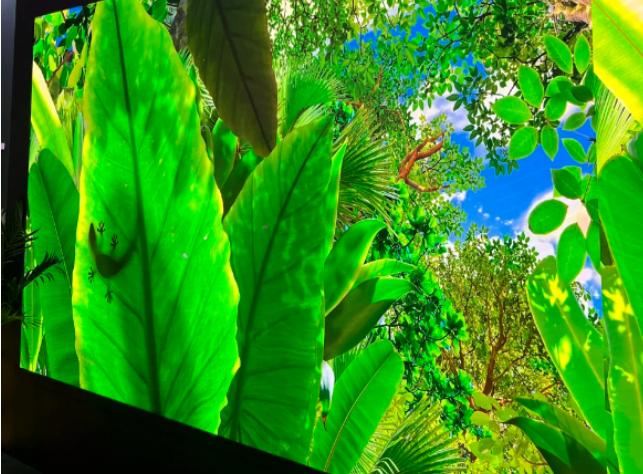
COB (Chip-on-Board) packaging eliminates the traditional bracket structure by directly bonding the Mini LED bare chip to the substrate and molding the entire assembly with encapsulant, resulting in a significant leap in performance. The integrated encapsulation structure offers protection against dust, moisture, impact, and oxidation, greatly enhancing the device’s durability and making daily operation and maintenance simple and convenient; The direct-attach chip heat dissipation channels effectively lower the device’s operating temperature, slowing the rate of luminous decay and extending the overall service life of the unit; the diffuse light source imaging eliminates graininess and glare, resulting in pure black levels and higher contrast, providing a more comfortable viewing experience at close range. With an extremely low pixel failure rate, it supports 24/7, zero-tolerance, uninterrupted operation in scenarios such as command centers.
Mini LED chips provide core support for the mass production of ultra-fine-pitch displays; micrometer-level light-emitting units significantly increase pixel density. Combined with wide color gamut calibration and HDR dynamic image quality technology, they deliver precise color reproduction and rich, layered image detail. By 2026, mass transfer processes will continue to be optimized, and mass production yield rates will steadily improve, enabling stable, large-scale mass production of ultra-fine-pitch products such as P0.5 and P0.7. The industry has now formed a clear technological tiering structure: SMD processes target the mid-to-low-end value-for-money market, while the COB+Mini LED combination dominates the high-end fine-pitch mainstream market. Diverse technological approaches coexist, comprehensively covering the needs of scenarios at different levels.
Micro-pitch Displays Become Widespread; 4K/8K Ultra-HD Becomes the Industry Standard
Driven by breakthroughs in core technologies, the pixel pitch of small-pitch LED displays will continue to shrink in 2026. Ultra-micro-pitch products will shed their “high-end-only” label to become mainstream industry choices, and ultra-high-definition visualization will achieve widespread adoption across all sectors. Whereas the P1.2 specification was previously the mainstream high-end standard, P0.7 and P0.9 are now standard configurations for command centers and exhibition halls. Ultra-fine-pitch products with pixel pitches of P0.5 and below are in stable mass production, continuously raising the bar for high-definition commercial displays.
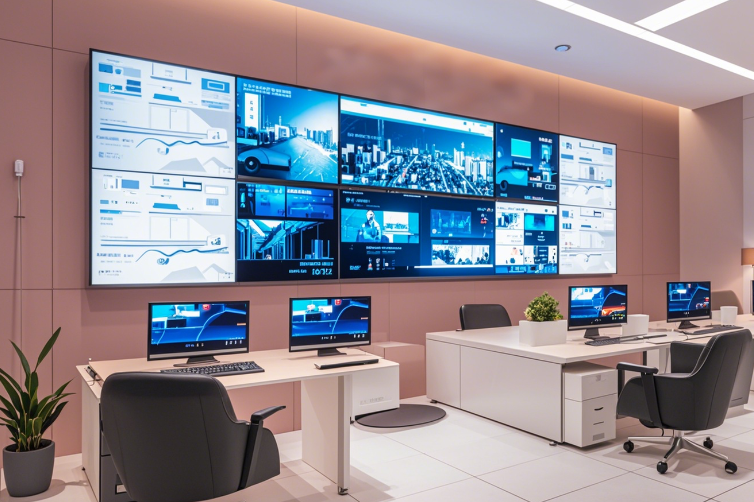
Ultra-fine-pitch products feature significantly enhanced pixel density, completely eliminating the graininess typically seen on traditional large screens at close range. They support ultra-high-definition viewing from within 1 meter, making them ideal for professional applications requiring close-range, high-quality visuals—such as high-end command centers, immersive studios, and digital cultural and museum exhibition halls. At the same time, 4K and 8K ultra-high-definition decoding technology has become widely adopted, enabling ultra-high-definition point-to-point display. It supports the layered overlay and free roaming of multiple surveillance feeds, business data, and video signals, fully meeting the visualization needs of multi-data integration in smart cities, smart transportation, and financial operations centers.
As the industry evolves, standards for the commercial Mini LED display sector continue to improve. Unified standards have been established for core parameters such as color consistency, panel alignment, and brightness uniformity, effectively addressing industry issues like inflated specifications and inconsistent quality, thereby standardizing product selection and project acceptance procedures. Currently, ultra-high-definition fine-pitch LED displays have fully penetrated core sectors such as government and enterprise, energy, cultural tourism, and office environments, becoming essential hardware for smart scenario construction.
Deeply Empowered by AI: Transitioning from Passive Display to Smart Interaction Hub
A key industry shift in 2026 lies in the evolution of fine-pitch LED displays from mere display devices to intelligent terminals that integrate sensing, computing, and interconnection—all with visualized signal adjustment and switching capabilities—marking a leap from passive playback to smart interaction. Traditional products can only display fixed content and require on-site manual operation; with limited functionality and cumbersome maintenance, they fail to meet the demands of digital smart scenario construction.
The new fine-pitch LED displays integrate AI algorithms, big data, and IoT technology, significantly enhancing their intelligence. Built-in image-processing chips automatically adjust brightness and color temperature based on ambient light, while noise reduction and frame-interpolation algorithms optimize dynamic images to reduce motion blur and ghosting. A cloud-based control system monitors device temperature, energy consumption, and LED status in real time, supporting unmanned inspections and fault alerts to minimize O&M costs.
Mid- to high-end models come standard with touchscreen, motion sensing, and voice control capabilities, enabling convenient screen switching and information retrieval. The devices feature standard integration interfaces that allow connectivity with various systems—including government, security, campus, and conference systems—to synchronize business data updates. Today, LED displays have become data hubs that integrate the entire business process, and their intelligent capabilities have become a key criterion in project procurement and selection.
Upgraded Lightweight Manufacturing Processes; Creative Custom Shapes Expand Application Boundaries
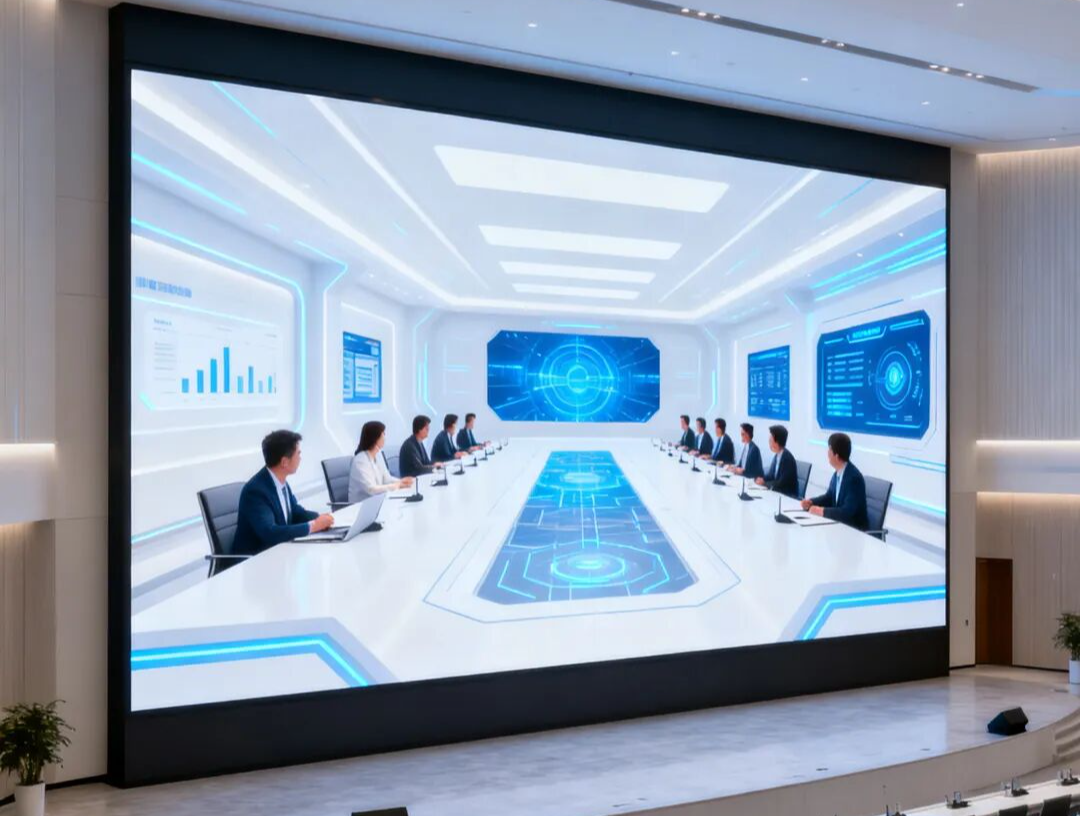
Traditional fine-pitch display cabinets are bulky, cumbersome to install, and have limited adaptability to different settings. In 2026, lightweight and modular manufacturing processes were fully implemented, combined with breakthroughs in flexible custom-shape technology to overcome the limitations of large-screen installation and design. The new product features an ultra-thin die-cast aluminum cabinet that significantly reduces thickness and weight while ensuring structural stability.
Lightweight modules eliminate the need for heavy-duty steel support frames; standard walls and ceilings can easily support them, simplifying construction, shortening project timelines, and reducing installation costs. They support a variety of installation methods—wall-mounted, floor-standing, ceiling-mounted, and recessed—making them suitable for diverse spaces such as conference rooms, exhibition halls, and public areas. The modular structure simplifies operation and maintenance; in the event of a single-point failure, only the corresponding unit needs to be replaced, eliminating the need for complete disassembly and significantly improving maintenance efficiency.
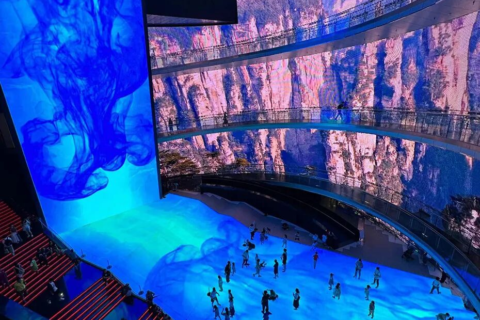
Flexible curved COB panels have entered mass production, with mature manufacturing processes for arched, circular, wavy, and spherical custom-shaped screens. Bendable modules adapt to distinctive architectural designs, creating immersive naked-eye 3D visual effects, and are commonly used in commercial complexes, digital exhibition halls, and art galleries. Lightweight design and custom-shaped manufacturing processes have advanced simultaneously, catering to both standardized conventional projects and personalized creative customization, thereby comprehensively expanding the application scenarios for fine-pitch LED displays.
Industry Standards Are Upgraded; Low-End Production Capacity Is Being Rapidly Phased Out
As customer demands for screen stability, service life, energy consumption, and quality control continue to rise, the fine-pitch LED display industry will undergo a major shake-up in 2026. Industry barriers to entry will rise, and substandard, inefficient production capacity will be gradually phased out.
In the industry’s early years of rapid, unregulated expansion, many manufacturers used low-cost raw materials and simplified production processes. As a result, finished products were prone to defects such as color discrepancies, uneven splicing, dead pixels, and high energy consumption, leading to frequent malfunctions and high operational and maintenance costs. Today, procurement strategies have shifted significantly; buyers no longer focus solely on initial purchase prices but place greater emphasis on long-term stability, energy efficiency, service life, and supporting services.
At this stage, industry standards for reliability, energy efficiency, and acceptance are continuously improving, with unified, mandatory metrics established for power consumption, luminous decay, protection, and panel alignment accuracy. Compliant production processes cover the entire workflow—from chip screening, packaging, and aging to color calibration—and undergo high- and low-temperature testing as well as extended power-on testing to ensure consistent quality across mass-produced products. Combined with zone-based intelligent dimming technology for energy savings, the overall energy consumption of the units has significantly decreased, aligning with green digital infrastructure initiatives. Industry competition has moved beyond a race to the bottom on price and shifted toward a comprehensive comparison of technology, quality, solutions, and services, with the sector steadily advancing toward standardization and high quality.
The maturation of COB and Mini LED technologies has laid a solid foundation for the development of the fine-pitch LED industry in 2026. Four major trends—the widespread adoption of ultra-high definition, intelligent upgrades, lightweight manufacturing processes, and standardized quality control—are comprehensively reshaping the landscape of the commercial display industry. In the future, the industry will continue to integrate cutting-edge technologies such as artificial intelligence, big data, and digital twins. Small-pitch LED displays will continue to deeply penetrate smart scenarios across a wide range of industries, leading the commercial display industry toward high-quality development with high-quality, intelligent, and customized display solutions.
相关新闻
-

How Can LED Screens Be Upgraded to “AI Human-Machine Interfaces” by 2026?
By 2026, the criteria for evaluating LED displays will move beyond traditional hardware metrics such as brightness and resolution; interactivity, intelligence, and adaptability to different scenarios will become the new industry benchmarks.
-
Exports Soared in Q2 2026, Marking a Temporary Peak in Deliveries for Chinese LED Display Manufacturers
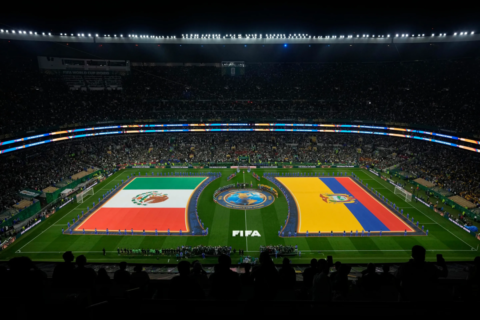
In the second quarter of 2026, China’s LED display industry experienced a significant surge in overseas shipments. The industry saw a temporary peak in deliveries.
-
Global LED Display Market in Q1 2026: “Volume Up, Prices Down”
According to Omdia’s latest “LED Display Market Tracking Report,” global LED display shipments in the first quarter rose slightly by 0.6% year-over-year, continuing the previous trend of moderate growth; however, market revenue fell by 2.3% year-over-year.
-
A Review of the LED Display Market in the First Half of 2026
In the first half of 2026, the shipment area of domestic fine-pitch LED displays continued to grow at a double-digit rate; however, due to the ongoing decline in average product prices, overall sales revenue fell year-over-year, and the industry entered a typical phase of “increasing volume but decreasing revenue.”
-
Tightening Supply of Raw Materials for LED Screens Disrupts Japan’s Supply Chain
The implementation of export controls on critical rare earths and core minerals has indeed placed tangible supply pressures on Japan’s display industry chain, while also creating a temporary market opportunity for Chinese LED display companies.
-
Comprehensive Outlook for the Entire LED Display Industry in the Second Half of 2026
In the second half of 2026, the LED display industry will officially enter a critical transition period characterized by a shift toward a market dominated by existing installations and structural optimization; the industry as a whole is unlikely to experience the kind of explosive growth seen in previous years.
-
2026 Growth Rankings for LED Screen Market Segments
In 2026, the global LED display industry stands at a critical juncture. According to industry forecasts, the global LED display market is projected to reach $8.105 billion in 2026.
-

How Much Room for Growth Does Smart Sports Offer the LED Display Industry?
The possibilities opened up by smart sports go far beyond 600,000 units. It points toward a full-scenario smart sports display ecosystem that spans “schools,” “homes,” and “communities.”