

A Review of the LED Display Market in the First Half of 2026
In the first half of 2026, the LED display industry continued to face competition in the existing market, with price wars persistently squeezing profit margins. Fluctuations in upstream raw material prices introduced new cost variables, while the accelerated adoption of COB packaging technology quietly reshaped the industry’s technological landscape. The overall market did not experience across-the-board high growth, and divergence became increasingly evident across different pixel pitch segments, technological routes, and regional markets.
Small-Pitch Shipment Area Up About 12% Average Price Down Nearly 50% Over Three Years
According to publicly available industry monitoring data, the shipment area of domestic small-pitch LED displays maintained double-digit growth in the first half of 2026. However, dragged down by the continued decline in average product prices, overall sales revenue fell year-over-year, marking the industry’s entry into a typical “volume up, revenue down” development phase.
This is a direct reflection of price competition entering a critical phase. Over the past three years, the average price per square meter for mainstream fine-pitch products has fallen from approximately 18,000 yuan to less than 10,000 yuan, representing a cumulative decline of nearly 50%. Entering 2026, although there have been signs of rising upstream costs, fierce homogenized competition in the mid-range market has prevented most manufacturers from readily passing on price pressures. Instead, they have had to maintain market share by squeezing their own profit margins, ultimately resulting in a scenario where shipment volumes rise while revenue declines.
This trend of rising volume but falling revenue is not a universal challenge across the entire industry, but rather a direct result of market segmentation. The growth in shipments stems primarily from increased penetration in lower-tier markets and commercial applications, as well as the release of demand in emerging overseas markets; the decline in sales revenue, however, is concentrated in the mid-range standardized product segment. This also signifies that the era of extensive growth—where the industry relied on scale expansion to drive revenue—has come to an end. A profit model based solely on volume is no longer sustainable, and companies must shift toward sectors with higher technological value-added.
COB Sales Share Exceeds 50% for the First Time; Technology Trajectory Reaches a Historic Turning Point
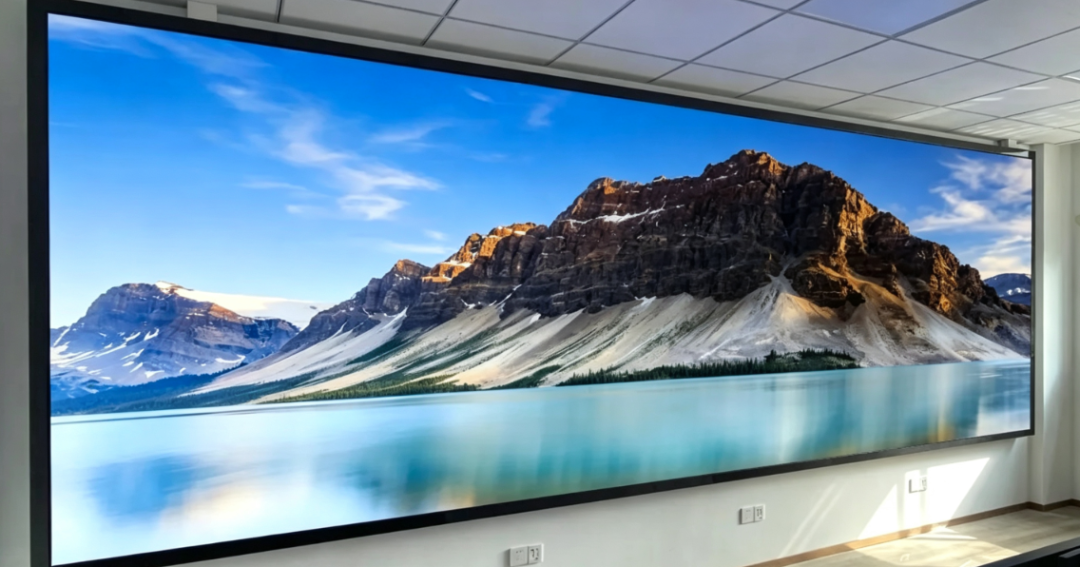
The most significant industry shift in the first half of 2026 was the transition in packaging technology. Industry monitoring data confirms that, in the domestic fine-pitch LED market during the first half of the year, COB packaging technology’s share of sales exceeded 50% for the first time, officially surpassing traditional SMD packaging to become the mainstream technology in the indoor fine-pitch sector.
This marks a milestone in the industry’s development. Prior to this, SMD had long dominated the fine-pitch market thanks to its mature processes, low cost, and ease of maintenance; COB, however, was limited by cost and maintenance challenges and was used only in high-end, niche applications. By the first half of 2026, as manufacturing processes across the supply chain continued to mature and economies of scale drove rapid cost reductions—combined with COB’s inherent advantages in protection, reliability, and pixel miniaturization capabilities—COB’s overall competitiveness had surpassed that of SMD.
The shift in technology routes exhibits distinct segmentation. In the micro-pitch segment of P1.4 and below, COB has achieved absolute dominance; whereas in the mid-to-low-end market of P1.5 and above, SMD still retains a certain market share due to its cost advantage. Overall, COB’s rise to the top signifies that the core logic of industry competition has shifted from a simple price war to a comprehensive contest of technical reliability and product quality.
Copper Prices Rise to 102,000 yuan per metric ton; Over 80 Companies Issue Price Adjustment Notices
In the first half of 2026, fluctuations in upstream raw material prices introduced new cost variables for the industry and unexpectedly accelerated the pace at which COB is replacing SMD. Data on the industry chain’s operations shows that copper prices rose to 0.2 ten thousand yuan per metric ton in the first half of the year. Combined with price increases for core materials such as driver ICs and PCB boards, this led to a rigid rise in the cost of SMD products. More than 80 LED-related companies across the entire industry chain have issued price adjustment notices, with significant price increases observed for some driver IC products.
Under this pricing pressure, the cost disparities between different technology routes have been further magnified. SMD packaging requires structures such as substrates, pads, and gold wires, making it highly dependent on precious metal consumables like copper, gold, and silver; increases in commodity prices are directly passed on to product costs. In contrast, the COB process employs direct die-attach and resin encapsulation with no substrate and fewer pads, resulting in significantly lower consumption of metal materials compared to SMD and minimal impact from raw material price fluctuations.
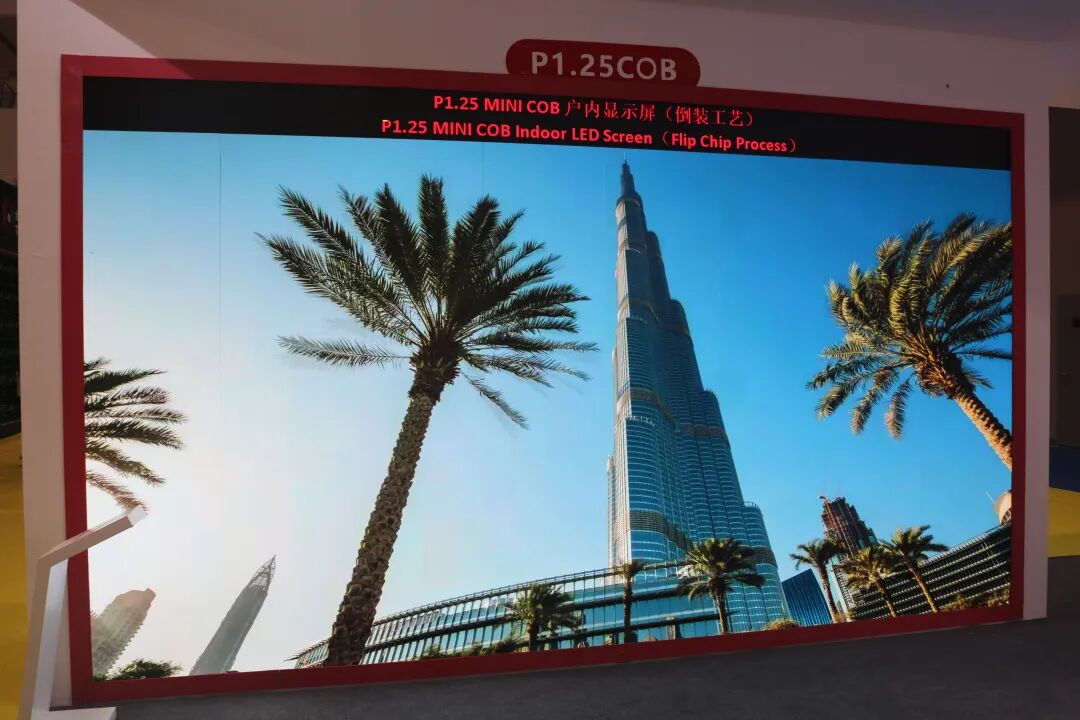
As one technology gains ground while the other loses it, a price inversion has emerged between SMD and COB products in mainstream pitch categories such as P1.25 and P1.56. COB products, which were originally priced higher, have now reached the same price range for mainstream pitches and even offer better value for money, driving downstream customers to proactively switch to COB solutions. The pace of this technological substitution is faster than the industry had previously anticipated.
Outdoor Display Shipments Up 16.1%; Ultra-Narrow Pitch Shipments Up 11.6%
In the first half of 2026, the market demand structure for LED displays continued to diverge, revealing a clear pattern of “growth at both ends of the spectrum, with pressure on the mid-range segment.” According to first-quarter market monitoring data, shipments of outdoor large screens with pixel pitches of P5 and above increased by 16.1% year-over-year, while shipments of micro-pitch products (P0.6–P0.99) rose by 1.6% year-over-year. In contrast, the mid-range pixel pitch category (P1.0–P1.99)—which accounts for the bulk of the industry’s revenue—saw revenue decline by 6.8% year-over-year, making it the primary segment dragging down overall revenue.
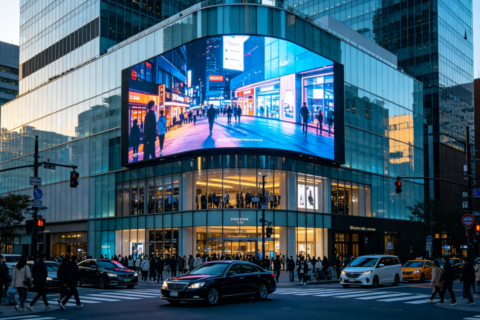
The drivers of growth at both ends of the spectrum differ. Growth in the outdoor large-screen sector is primarily driven by cultural tourism lighting projects, smart city municipal projects, and sporting events—the hosting of major international events has spurred procurement demand for LED screens in venues, fan zones, and urban landmarks, resulting in a significant increase in overseas orders; domestic urban renewal and night economy development projects across the country have also continued to drive demand for outdoor large-screen installations.
Growth in micro-pitch products, on the other hand, stems from the rigid demand for digital transformation in government and enterprise sectors. Scenarios such as command and control centers, broadcasting studios, and high-end conference rooms—which place extremely high demands on display precision and operational stability—constitute the core application scenarios for micro-pitch products. As digital transformation deepens, this type of high-end demand continues to be steadily released, making it the growth segment with the highest certainty in the industry. In contrast, the mid-range segment suffers from severe product homogenization and intense price wars; coupled with relatively weak commercial demand, it has ultimately fallen into a predicament of falling prices and stagnant volumes.
Asia-Pacific Shipments Up 16.9% Year-Over-Year; Emerging Markets Become Growth Engine for Overseas Expansion
Against the backdrop of intensifying competition in the domestic market, overseas markets have become a key growth opportunity for the industry. According to global market monitoring data, LED display shipments in the Asia-Pacific region grew by approximately 16.9% year-over-year, making it the region with the highest growth rate globally. The release of demand from emerging markets is reshaping the global industry landscape.
The growth momentum stems primarily from Southeast and South Asian countries such as India, Indonesia, and Vietnam. These regions are in a rapid phase of infrastructure development and commercial digitalization, with sustained growth in procurement demand for LED screens at urban landmarks, transportation hubs, and commercial complexes, and a rapid increase in the penetration rate of fine-pitch products. The North American market has also maintained steady growth, driven primarily by the upgrading and renovation of sports venues and the deployment of large-format screens in public spaces.
From a global perspective, China remains the world’s largest single regional market, but its market share has been gradually declining since 2022. Domestic manufacturers are accelerating their overseas expansion, adopting a strategy of “building brands in high-end markets and expanding market share in emerging markets,” while enhancing responsiveness through localized warehousing and service network development. Overseas emerging markets not only provide an outlet for domestic production capacity but have also become a key pillar for hedging against fluctuations in domestic demand and smoothing out corporate business cycles.
A review of these five sets of data reveals that in the first half of 2026, the LED display industry is in a transitional phase—one in which the old growth model is receding and the foundations for a new development paradigm are being laid. For industry participants, the era of relying on low prices to drive volume sales is over; technological differentiation, deep engagement with specific application scenarios, and global expansion will become the core elements of competition in the second half of the year. In the second half of the year, as technological substitution continues to deepen and demand from overseas sporting events further materializes, industry polarization will persist. Companies that truly possess core competitiveness will secure a more advantageous position in this new round of industry realignment.
相关新闻
-
2026 Fine-Pitch LED Displays: COB and Mini LED Technologies Drive Industry Innovation
COB fine-pitch LED displays, “as core hardware for smart visualization, have been widely adopted in government, security, cultural tourism, and corporate office settings.”
-
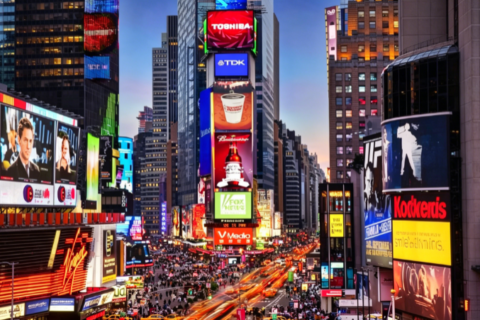
Global LED Display Market in Q1 2026: “Volume Up, Prices Down”
According to Omdia’s latest “LED Display Market Tracking Report,” global LED display shipments in the first quarter rose slightly by 0.6% year-over-year, continuing the previous trend of moderate growth; however, market revenue fell by 2.3% year-over-year.
-
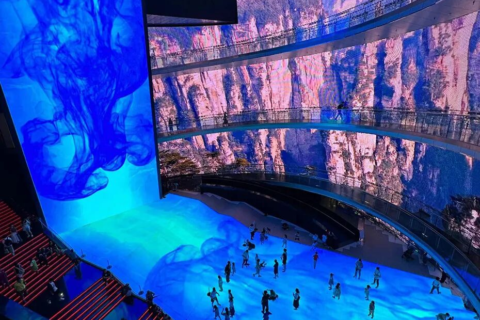
2026 Growth Rankings for LED Screen Market Segments
In 2026, the global LED display industry stands at a critical juncture. According to industry forecasts, the global LED display market is projected to reach $8.105 billion in 2026.
-
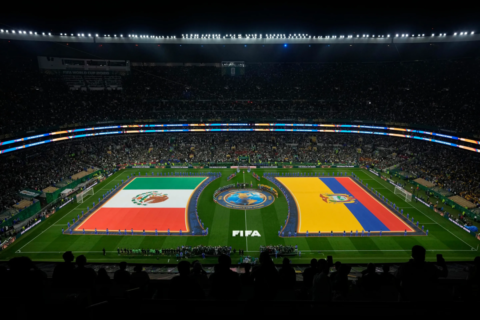
Exports Soared in Q2 2026, Marking a Temporary Peak in Deliveries for Chinese LED Display Manufacturers
In the second quarter of 2026, China’s LED display industry experienced a significant surge in overseas shipments. The industry saw a temporary peak in deliveries.
-
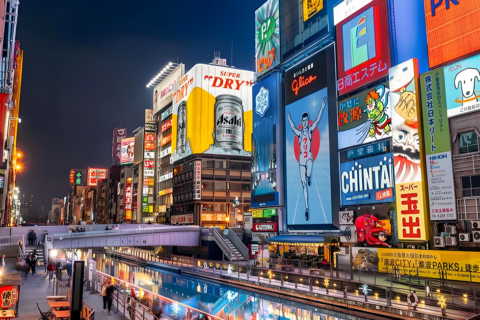
Tightening Supply of Raw Materials for LED Screens Disrupts Japan’s Supply Chain
The implementation of export controls on critical rare earths and core minerals has indeed placed tangible supply pressures on Japan’s display industry chain, while also creating a temporary market opportunity for Chinese LED display companies.
-

How Can LED Screens Be Upgraded to “AI Human-Machine Interfaces” by 2026?
By 2026, the criteria for evaluating LED displays will move beyond traditional hardware metrics such as brightness and resolution; interactivity, intelligence, and adaptability to different scenarios will become the new industry benchmarks.
-

How Much Room for Growth Does Smart Sports Offer the LED Display Industry?
The possibilities opened up by smart sports go far beyond 600,000 units. It points toward a full-scenario smart sports display ecosystem that spans “schools,” “homes,” and “communities.”
-
Comprehensive Outlook for the Entire LED Display Industry in the Second Half of 2026
In the second half of 2026, the LED display industry will officially enter a critical transition period characterized by a shift toward a market dominated by existing installations and structural optimization; the industry as a whole is unlikely to experience the kind of explosive growth seen in previous years.