

Tightening Supply of Raw Materials for LED Screens Disrupts Japan’s Supply Chain
On June 20, 2026, the latest trade data released by China’s General Administration of Customs drew industry attention. Since China announced in mid-January of this year that it would tighten export controls on dual-use items to Japan, the impact of the tightening supply of core upstream raw materials has been gradually spreading to the downstream sector of the industry. In particular, exports of key materials such as yttrium—which are directly related to LED display production—have declined significantly. As Japan’s domestic display supply chain faces supply pressures, Chinese LED display companies, which possess the advantage of a complete industrial chain, are now engaging in discussions about expanding into the Japanese market.
Exports of Core Raw Materials Shrink Sharply; Effects of Export Controls Continue to Emerge
In January of this year, China officially announced stricter export controls on dual-use items to Japan. Judging from the latest trade data for May, the effects of these control policies have continued to unfold.
Focusing on the LED display supply chain, the contraction in the supply of core raw materials is particularly pronounced. According to publicly available trade data, China’s current exports of yttrium to Japan amount to only 1.13% of last year’s total volume, and yttrium is a “key raw material” for the production of LED screens and semiconductor equipment. Meanwhile, the cumulative export volume of rare earth chemicals—including heavy rare earth categories—from March to May this year has fallen to its lowest level since 2023.
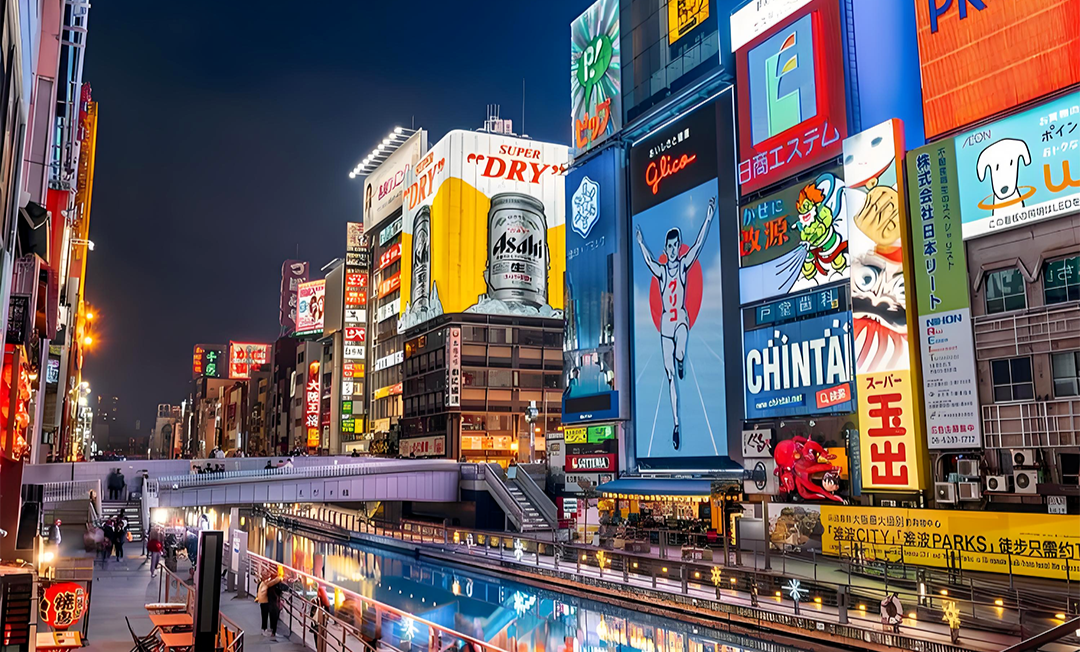
Supply Pressures Trickle Downstream, Putting Strain on Japan’s Display Industry Chain
The impact of the ongoing tightening of raw material supplies is spreading from the upstream mining sector to domestic manufacturing in Japan, and the LED display industry is also being affected.
Faced with supply shortages of critical minerals, Japanese manufacturers are generally drawing down existing inventories and seeking alternative supply chains globally. For Japan’s LED display industry, a sharp decline in imports of core raw materials such as yttrium has first driven up procurement costs and exacerbated uncertainty regarding production capacity and order fulfillment; if these supply gaps remain unfilled over the long term, domestic manufacturers’ ability to ramp up production and fulfill orders will be constrained.
Specifically in LED display manufacturing, yttrium and high-purity rare earth chemicals serve as core doping materials for phosphors, high-end backlight materials, and precision display device coatings. The sharp decline in supply has directly limited the production capacity of high-end product lines at Japanese display companies. In particular, product categories with extremely high requirements for material stability—such as commercial high-definition displays, high-brightness outdoor displays, and specialized industrial displays—have experienced fluctuations in yield rates and a decline in quality consistency as inventories of scarce raw materials have run low. At the same time, raw material shortages have driven up procurement and processing costs; combined with underutilized production capacity, this has increased overall manufacturing costs and weakened price competitiveness. Some small and medium-sized manufacturers have already scaled back production capacity and postponed new product launches, while production and operational pressures across the industry continue to rise.
Advantages of the Full Industry Chain Come to the Forefront; Domestic Display Manufacturers Seize a Market Window
Against the backdrop of raw material pressures facing Japan’s domestic display industry chain, Chinese LED display manufacturers—which possess a complete industrial layout—may be poised to seize a temporary window of opportunity to expand into the Japanese market.
After years of development, China’s LED display industry has established a complete industrial chain spanning from upstream core raw materials and midstream component packaging to downstream end applications. It possesses strong self-sufficiency in critical upstream minerals and boasts outstanding overall supply chain stability. Compared to the rising raw material costs and supply instability faced by Japanese manufacturers, Chinese LED display companies hold natural advantages in terms of raw material supply, manufacturing costs, and delivery lead times.
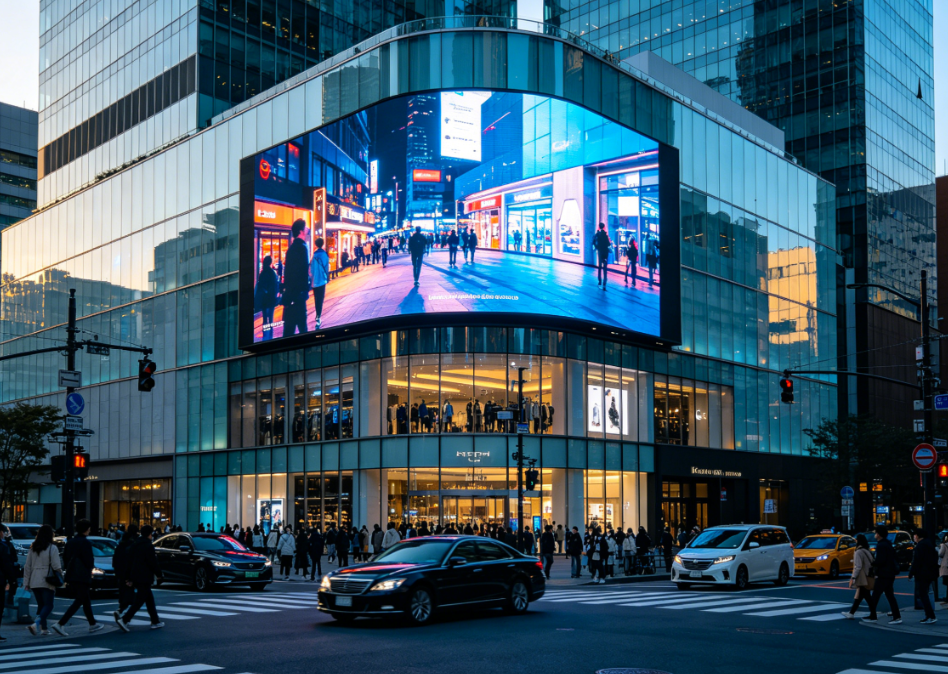
More importantly, China’s LED industry is making the transition from “scale leadership” to “technology leadership.” In the core sector of next-generation display technology—Mini/Micro LED—Chinese brands account for approximately 60 percent of the global Mini LED display market, and China ranks first globally in the number of Micro LED patent applications. In terms of technological breakthroughs, key progress has been made in the efficiency of gallium nitride-based red light chips; mass transfer equipment has been successfully localized, significantly reducing Micro LED manufacturing costs, and multiple mass production lines have been completed and put into operation. Chinese enterprises have established vertical synergy capabilities across the entire value chain—from core equipment and precision manufacturing to end-user applications—and enjoy a clear generational technological advantage.
This technological advantage holds direct strategic significance for Chinese LED display companies looking to expand into the Japanese market. High-end display applications in Japan—such as commercial high-definition and outdoor high-brightness displays—are precisely the areas where Mini/Micro LED technology can best demonstrate its strengths. With higher brightness, contrast, and color saturation, these technologies can fully meet the stringent image quality requirements of high-end commercial applications. During this window of domestic production capacity shortages in Japan, Chinese companies can leverage their technologically advanced product solutions to precisely fill the supply gap in the high-end market.
At the same time, Chinese LED display companies possess both large-scale mass production capabilities and flexible customization capabilities, allowing them to adapt to both major and minor project demands in the Japanese market. Relying on mature cross-border trade experience and favorable regional economic and trade conditions, these companies have well-established overseas expansion processes and compliance systems, enabling them to quickly meet Japan’s electrical, safety, and environmental certification requirements and significantly reduce barriers to project implementation.
From the perspective of market demand, there is stable demand for LED displays in Japanese commercial retail, outdoor media, and venue construction sectors. Should domestic Japanese manufacturers experience production capacity contraction, delivery delays, or price increases due to raw material supply issues, local customers would have a practical need to seek alternative suppliers. In such a scenario, Chinese LED companies—leveraging their stable supply capabilities, mature product portfolios, and technological leadership in the Mini/Micro LED sector—would become significantly more attractive to Japanese B2B customers, presenting a tangible opportunity to enter the market and fill the supply gap.
With Multiple Variables at Play, Real Barriers to Market Expansion Remain
Although short-term market opportunities are clearly visible, Chinese LED companies still face certain objective constraints in expanding into the Japanese market, and market penetration is likely to proceed gradually.
In the long term, Japan is steadily advancing the diversification of its rare earth supply chain through G7 cooperation, mineral resource recycling, and trade regulation. This is expected to gradually alleviate pressure on raw material supply, making the current market window a temporary phenomenon.
At the same time, current economic and trade exchanges between China and Japan remain relatively cautious, which to some extent has a minor impact on companies’ cross-border market expansion. In addition, Japan’s LED display market has well-established access regulations, and domestic brands have deep-rooted distribution channels. Chinese companies still have room for improvement in terms of local brand recognition and supporting service systems, requiring them to steadily cultivate the market.
Overall, the implementation of export controls on key rare earths and core minerals has indeed created tangible supply pressures for Japan’s display industry chain, while also creating a temporary market opportunity for Chinese LED display companies. However, whether this window of opportunity can be converted into actual market share depends not only on the companies’ own product competitiveness and localized operational capabilities but is also influenced by multiple factors, including the geopolitical landscape and industrial policies. The future direction of export policies for critical minerals and the progress of Japan’s supply chain restructuring will continue to shape the competitive landscape of the LED display industries in both China and Japan—a development that warrants ongoing attention from the industry.
相关新闻
-
2026 Growth Rankings for LED Screen Market Segments
In 2026, the global LED display industry stands at a critical juncture. According to industry forecasts, the global LED display market is projected to reach $8.105 billion in 2026.
-

How Much Room for Growth Does Smart Sports Offer the LED Display Industry?
The possibilities opened up by smart sports go far beyond 600,000 units. It points toward a full-scenario smart sports display ecosystem that spans “schools,” “homes,” and “communities.”
-
Comprehensive Outlook for the Entire LED Display Industry in the Second Half of 2026
In the second half of 2026, the LED display industry will officially enter a critical transition period characterized by a shift toward a market dominated by existing installations and structural optimization; the industry as a whole is unlikely to experience the kind of explosive growth seen in previous years.
-
How Can LED Screens Be Upgraded to “AI Human-Machine Interfaces” by 2026?
By 2026, the criteria for evaluating LED displays will move beyond traditional hardware metrics such as brightness and resolution; interactivity, intelligence, and adaptability to different scenarios will become the new industry benchmarks.
-
2026 Fine-Pitch LED Displays: COB and Mini LED Technologies Drive Industry Innovation
COB fine-pitch LED displays, “as core hardware for smart visualization, have been widely adopted in government, security, cultural tourism, and corporate office settings.”
-
Exports Soared in Q2 2026, Marking a Temporary Peak in Deliveries for Chinese LED Display Manufacturers
In the second quarter of 2026, China’s LED display industry experienced a significant surge in overseas shipments. The industry saw a temporary peak in deliveries.
-
Global LED Display Market in Q1 2026: “Volume Up, Prices Down”
According to Omdia’s latest “LED Display Market Tracking Report,” global LED display shipments in the first quarter rose slightly by 0.6% year-over-year, continuing the previous trend of moderate growth; however, market revenue fell by 2.3% year-over-year.
-
A Review of the LED Display Market in the First Half of 2026
In the first half of 2026, the shipment area of domestic fine-pitch LED displays continued to grow at a double-digit rate; however, due to the ongoing decline in average product prices, overall sales revenue fell year-over-year, and the industry entered a typical phase of “increasing volume but decreasing revenue.”