

How Much Room for Growth Does Smart Sports Offer the LED Display Industry?
The “role upgrade” of a single screen is opening up a new market segment worth tens of billions. In traditional sports venues, LED displays were nothing more than “electronic blackboards” for timing and scoring. But in the era of smart sports, their role is being redefined—integrating data collection, AI analysis, real-time interaction, and instructional management, and evolving from passive display terminals into “smart hubs” for human-screen interaction.
Where Does the Market Potential for 600,000 Units Come From?
According to research data from relevant institutions, shipments of smart sports display terminals in schools reached 33.7K in 2025, representing a year-over-year increase of 42.8%. Based on applications in sports scenarios, assuming that each school is equipped with at least one unit of each of the three product categories—single-person physical fitness testing, multi-person physical fitness testing, and performance display terminals—the potential market for smart sports display terminals in the K-12 general education sector will exceed 600,000 units.

Behind these figures lies a tangible demand for hardware. The number of sports facilities nationwide has reached 4.8417 million, with a total area of 4.23 billion square meters—equating to 3 square meters of sports facility space per capita. These figures point to the same conclusion from different perspectives: whether it’s the digital transformation of existing facilities or the organic growth of the global sports display market, both offer a vast and sustainable market opportunity for LED displays.
Looking at the bigger picture, the total scale of China’s sports industry has reached 5 trillion yuan, with the market for digital and intelligent sports equipment accounting for 50 billion yuan. Global sales in the athletic performance testing market are projected to reach $173 million in 2025 and are expected to grow to $328 million by 2032. The global market for LED stadium screens is projected to grow from 13.6 billion yuan in 2025 to 23.7 billion yuan in 2032. Smart sports on campus is precisely one of the fastest-growing segments within this sector.
Four Policy Engines Are Simultaneously Gaining Momentum
First: The “Outline of the Plan for Building a Powerhouse in Education (2024–2035)” explicitly states the need to “implement the ‘health first’ educational philosophy” and ensures that “primary and secondary school students engage in at least two hours of comprehensive physical activity daily”—this mandatory time allocation for outdoor physical activity directly drives the demand for outdoor display terminals.
Second: The Ministry of Education and four other departments jointly issued the “Opinions on Implementing the Student Physical Fitness Enhancement Plan,” proposing to “explore the implementation of digitally empowered sports.” It encourages the deep integration of sensor technology, big data, and artificial intelligence with school sports; “explores the smart upgrade of school sports venues and facilities”; “utilizes digital technologies to strengthen formative assessment”; and “establishes digital profiles of students’ physical fitness and health.”
Third: The State Council approved the “15th Five-Year Plan for Expanding Consumption,” which explicitly calls for promoting the integration of the sports industry, expanding application scenarios for smart sports, and upgrading the public’s sports consumption experience; it also calls for deepening the application of technology and strengthening creative leadership in consumer sectors such as sports, while expanding fitness and sports consumption scenarios. This provides clear policy guidance and consumer-driven momentum for the digital and intelligent upgrade of smart sports on campus.
Fourth: The 2022 edition of the new physical education curriculum standards has been fully implemented. Traditional physical education has long faced challenges such as “insufficient teaching staff, subjective evaluation, lack of data, and homogenized training,” which have compelled the integration of technological solutions. Physical education is shifting from being “experience-driven” to “data-driven,” with display terminals becoming the core interface for data presentation.
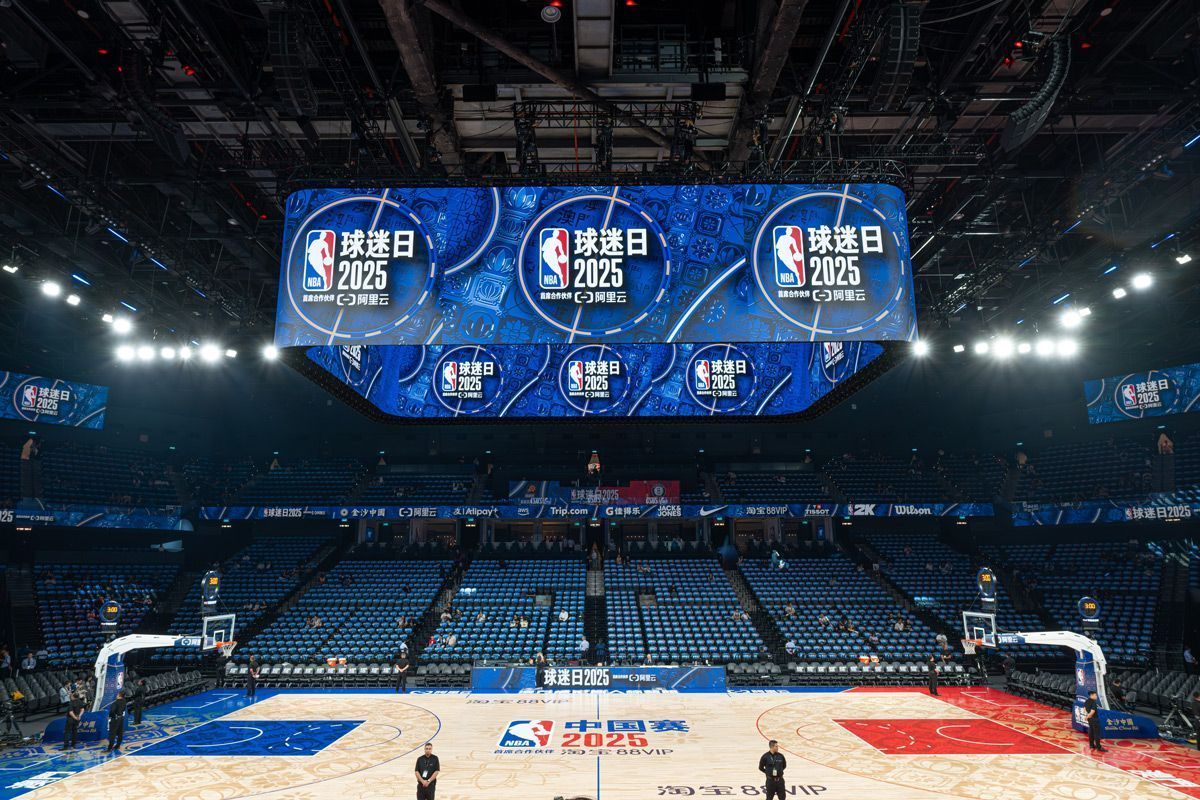
From “Scoreboard” to “Smart Hub”
The role of LED displays in school sports is undergoing a three-stage transformation. In the 1.0 era, they were merely passive display tools for timing, scoring, and information dissemination. In the 2.0 era, they began to support data interaction—displaying real-time athletic data and physical fitness test results, and enabling human-screen interaction. In the 3.0 era, they have evolved into AI-powered sensing terminals: using AI recognition algorithms, they capture the trajectories of movements such as long jumps and running in real time, digitally record students’ athletic data, and automatically generate physical fitness test reports.
Third: The State Council approved the “15th Five-Year Plan for Expanding Consumption,” which explicitly calls for promoting the integration of the sports industry, expanding application scenarios for smart sports, and upgrading the public’s sports consumption experience; it also calls for deepening the application of technology and strengthening creative leadership in consumer sectors such as sports, while expanding fitness and sports consumption scenarios. This provides clear policy guidance and consumer-driven momentum for the digital and intelligent upgrade of smart sports on campus.
Fourth: The 2022 edition of the new physical education curriculum standards has been fully implemented. Traditional physical education has long faced challenges such as “insufficient teaching staff, subjective evaluation, lack of data, and homogenized training,” which have compelled the integration of technological solutions. Physical education is shifting from being “experience-driven” to “data-driven,” with display terminals becoming the core interface for data presentation.
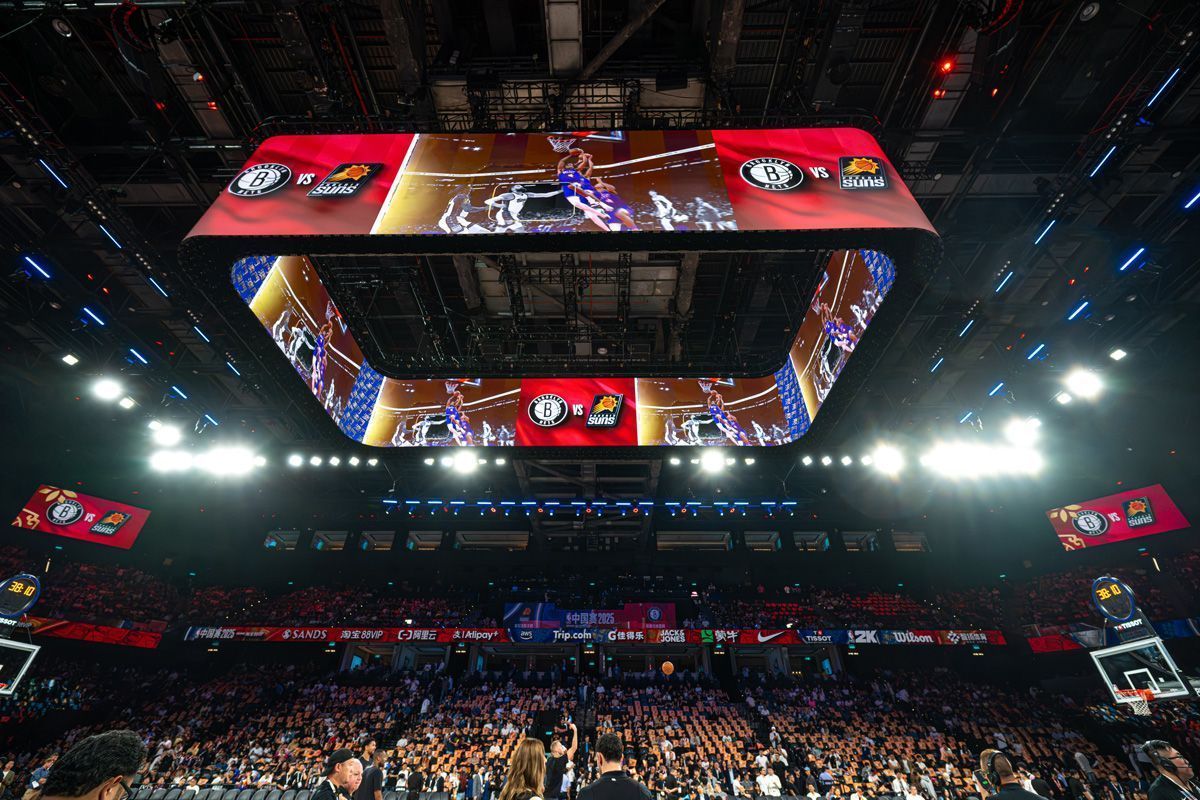
From “Scoreboard” to “Smart Hub”
The role of LED displays in campus sports is undergoing a three-stage transformation. In the 1.0 era, they were merely passive display tools for timing, scoring, and information dissemination. In the 2.0 era, they began to support data interaction—displaying real-time athletic data and physical fitness test results, and enabling human-screen interaction. In the 3.0 era, they have evolved into AI-powered sensing terminals: using AI recognition algorithms, they capture movement trajectories—such as those in long jump and running—in real time, digitally record students’ athletic data, and automatically generate physical fitness test reports.
Some manufacturers have already established a hardware portfolio that includes AI teaching screens, AI physical training screens, AI physical fitness test screens, and AI running screens, covering the entire “teaching-learning-training-testing-evaluation” process. LED displays have permeated every aspect of school life, from classroom instruction and recess exercises to standardized physical fitness tests, campus competitions, and home-school health management. From a mere “scoreboard” to a “smart hub,” the value of these displays has been redefined.
The “Tough Challenges” Behind the Opportunities
Since campus sports activities are primarily held outdoors, outdoor display terminals face far stricter requirements than indoor ones: they generally must meet an IP65+ protection rating to ensure dustproof, waterproof, and fog-proof capabilities; with surface temperatures exceeding 50°C in summer, they require high-temperature-resistant heat dissipation designs; in bright outdoor environments, they need high-brightness screens with anti-glare treatment; they must support touch input with wet hands to accommodate students’ sweat; and front-end CG components must be impact- and shatter-resistant to withstand impacts from balls.
The reality is that most outdoor products currently rely on air-cooling technology for heat dissipation, which significantly compromises touch sensitivity and display quality. With products and technologies varying widely in quality, most outdoor applications fail to meet these requirements, and there is an urgent need to standardize the specifications for display terminals. Although GB/T 29458-2024, “Requirements and Test Methods for LED Displays in Sports Venues,” is available for reference, there remains a gap in standards specifically for smart sports in schools—and this presents a window of opportunity for display manufacturers to participate in standard-setting.
Shift in Procurement Models: From “Selling Screens” to “Selling Solutions”
In previous years, procurement of smart sports terminals primarily consisted of piecemeal purchases of individual physical fitness testing terminals and standalone cameras. However, in the first half of 2026, projects coordinated by district and county education bureaus accounted for over 60% of the total, with tender documents explicitly requiring integrated delivery of “hardware terminals + platform + computing infrastructure + operation and maintenance services.”
Market competition is shifting from price wars over individual hardware products to a comprehensive contest involving integrated delivery capabilities, the depth of AI-algorithm-based instruction, holistic data governance, and localized operation and maintenance services. The competitiveness of traditional, single-hardware manufacturers will gradually weaken, while manufacturers capable of integrated delivery of hardware, software, and platform solutions will stand out.
For LED display companies, this means they must consider: Should they expand upward by independently developing or collaborating on software platforms and AI algorithms? Should they integrate horizontally by forming deep partnerships with educational IT solution providers? Or should they establish a localized O&M service network?
The potential unlocked by smart sports extends far beyond 600,000 units. It points toward a full-scenario smart sports display ecosystem that spans from “campuses” to “homes” to “communities.” By seizing the main trend of integrated hardware and software development, creating tiered, standardized solutions tailored to different campus scenarios, and aligning with regional educational digitization and coordinated construction needs—whoever can first complete the transition from “selling screens” to “selling solutions” will gain a head start in this long-term race.
相关新闻
-
2026 Growth Rankings for LED Screen Market Segments
In 2026, the global LED display industry stands at a critical juncture. According to industry forecasts, the global LED display market is projected to reach $8.105 billion in 2026.
-
Exports Soared in Q2 2026, Marking a Temporary Peak in Deliveries for Chinese LED Display Manufacturers
In the second quarter of 2026, China’s LED display industry experienced a significant surge in overseas shipments. The industry saw a temporary peak in deliveries.
-
A Review of the LED Display Market in the First Half of 2026
In the first half of 2026, the shipment area of domestic fine-pitch LED displays continued to grow at a double-digit rate; however, due to the ongoing decline in average product prices, overall sales revenue fell year-over-year, and the industry entered a typical phase of “increasing volume but decreasing revenue.”
-

Tightening Supply of Raw Materials for LED Screens Disrupts Japan’s Supply Chain
The implementation of export controls on critical rare earths and core minerals has indeed placed tangible supply pressures on Japan’s display industry chain, while also creating a temporary market opportunity for Chinese LED display companies.
-

How Can LED Screens Be Upgraded to “AI Human-Machine Interfaces” by 2026?
By 2026, the criteria for evaluating LED displays will move beyond traditional hardware metrics such as brightness and resolution; interactivity, intelligence, and adaptability to different scenarios will become the new industry benchmarks.
-

2026 Fine-Pitch LED Displays: COB and Mini LED Technologies Drive Industry Innovation
COB fine-pitch LED displays, “as core hardware for smart visualization, have been widely adopted in government, security, cultural tourism, and corporate office settings.”
-

Global LED Display Market in Q1 2026: “Volume Up, Prices Down”
According to Omdia’s latest “LED Display Market Tracking Report,” global LED display shipments in the first quarter rose slightly by 0.6% year-over-year, continuing the previous trend of moderate growth; however, market revenue fell by 2.3% year-over-year.
-
Comprehensive Outlook for the Entire LED Display Industry in the Second Half of 2026
In the second half of 2026, the LED display industry will officially enter a critical transition period characterized by a shift toward a market dominated by existing installations and structural optimization; the industry as a whole is unlikely to experience the kind of explosive growth seen in previous years.